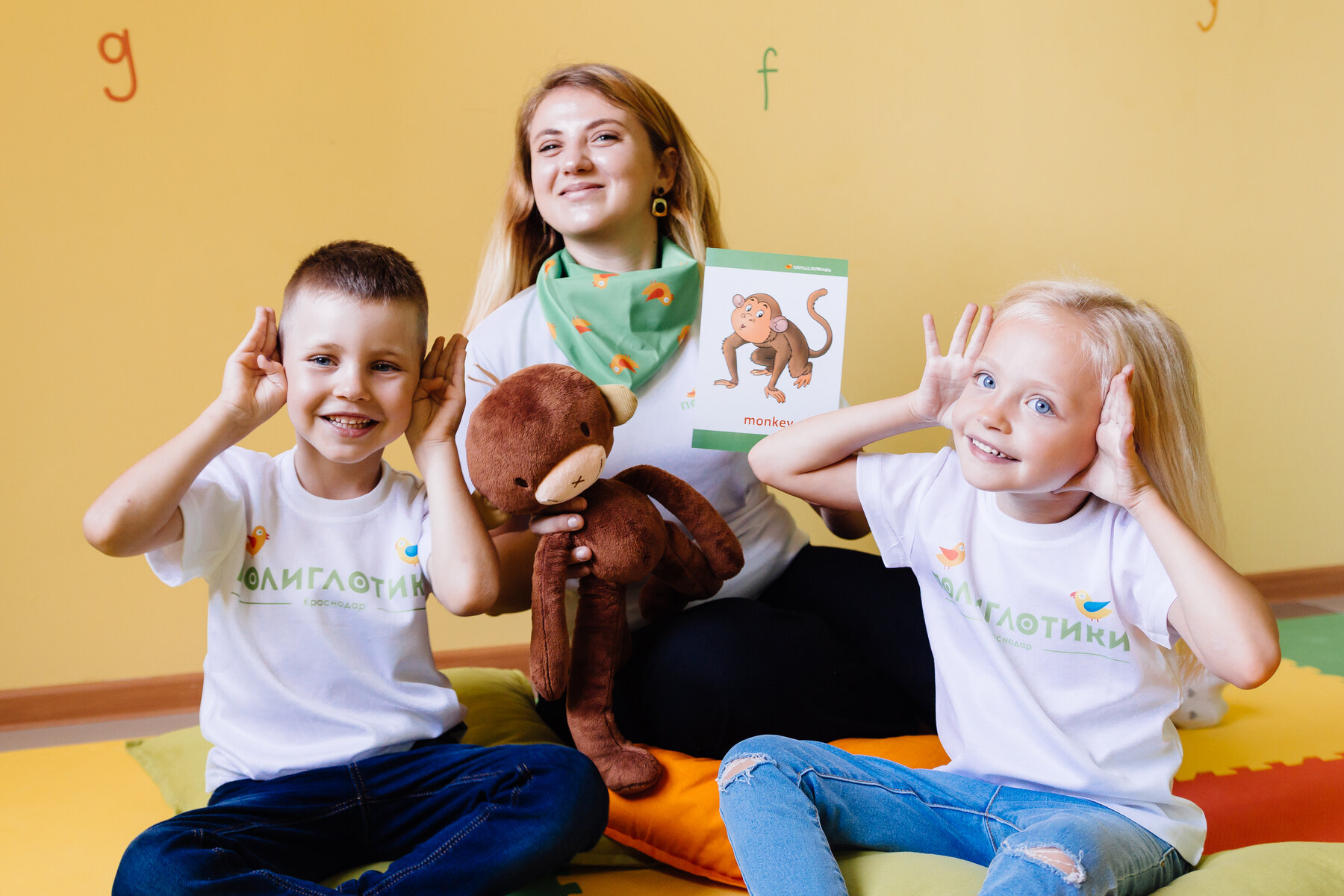
At PolyKids,
English is not taught as a subject — it is experienced as a language.
Our method mirrors the way children naturally acquire their first
language: through listening, interaction, exploration, and meaningful communication.
We combine full immersion with age-appropriate
structure.
Younger children absorb language through sensory-rich experiences and guided
play.
Older students develop analytical thinking, literacy, and structured expression — all within a
supportive English-speaking environment.
Every stage of our Development Framework is carefully designed to
ensure:
- Continuous progression
- Balanced skill development
- Emotional confidence
- Measurable growth
The result? Children think, communicate, and express
themselves in English naturally and confidently.
Listening → Understanding → Speaking → Reading →
Writing
The PolyKids Language Development Path
At PolyKids, our English Development Framework is built on five
progressive stages of language acquisition.
Each stage reflects how children naturally develop communication
skills — and each of our core programs is designed to support and strengthen that stage with structured
immersion and measurable outcomes.
Language growth is not rushed.
It is guided.
Stage 1. Early
Immersion
Implemented in: Early Immersion Program (1–2 years)
Language begins with sound and connection.
Children absorb English through rhythm, repetition, movement, and emotional
interaction. They begin producing simple words and short expressions naturally, without correction or
pressure.
Grammar is not introduced consciously — correct patterns are consistently modelled,
forming the foundation for future structure.
🔹 Focus: auditory recognition, pronunciation patterns, first words
Stage 2. Foundational
Understanding
Implemented in: Foundational Language Program (2–3 years)
Meaning develops before structure is explained.
Children understand English through immersive play, storytelling, and real-life
simulations. Words gain meaning through action and context, not translation.
Short phrases and early sentences emerge as children internalise basic language
patterns naturally.
🔹 Focus: contextual comprehension, phrase formation, early expressive confidence
Stage 3. Structured
Speaking
Implemented in: Preparatory English Curriculum (3–7 years)
Communication becomes intentional and organised.
Children expand vocabulary, build full sentences, and participate in guided dialogues
and projects. Speaking becomes more structured while remaining natural and confident.
At this stage, intuitive grammar awareness develops, children recognise patterns and
begin applying them more consciously.
🔹 Focus: sentence construction, dialogue skills, vocabulary expansion, intuitive
grammar
Stage 4. Literacy
Development
Implemented in: English Literacy & Phonics Program (6–8 years)
Speech connects to print.
Through systematic phonics instruction, children link sounds to letters and begin
reading independently. Familiar oral language becomes visible in written form.
Reading strengthens structural awareness and reinforces grammar patterns already
acquired through speech.
🔹 Focus: phonemic awareness, reading fluency, structural recognition
Stage 5. Academic
Communication
Implemented in: Primary Academic English Program (7–12 years)
Language becomes precise, independent, and academic.
Students organise ideas into coherent texts, participate in complex discussions, and
refine grammatical accuracy. Writing and speaking become tools for reasoning, analysis, and
self-expression.
Grammar is now developed consciously — not as isolated rules, but as a system that
supports clarity and academic confidence.
🔹 Focus: structured writing, grammar accuracy, academic vocabulary, independent
communication
Technology Within the
PolyKids Method
Smarter Learning. Stronger Engagement.
At PolyKids, technology enhances — but never replaces — human
interaction.
Digital tools are carefully integrated into our English
Development Framework to reinforce immersion, personalise progress, and extend learning beyond the
classroom.
Technology supports structure, engagement, and measurable
growth.
Gamified Home
Practice
Children reinforce classroom learning through interactive home activities designed
around vocabulary and communication goals.
Short, engaging tasks turn repetition into meaningful practice — helping children
retain language naturally and consistently.
Immersive Virtual
Experiences
Through guided virtual sessions, students explore English-speaking environments and
cultural contexts in a safe, structured format.
Virtual immersion expands real-world awareness while strengthening listening and
contextual comprehension.
Adaptive Learning
& Progress Tracking
Personalised digital tracks adjust to each child’s stage and performance level.
Parents receive clear, visual progress reports aligned with the PolyKids Development
Framework — ensuring transparency and measurable outcomes.
Interactive Learning
Tools
Smart educational devices — such as pronunciation-support pens and audio-enabled
readers — allow children to hear, repeat, and refine language independently.
These tools strengthen phonemic awareness and support literacy development in a
guided way.
Technology at PolyKids is
purposeful, structured, and aligned with each stage of development.
Scientific Foundations of the PolyKids
Method
Language acquisition is most effective when it follows
the way the brain naturally develops communication skills.
Research in early childhood education and second language
acquisition shows that young learners absorb language patterns most successfully through meaningful
interaction, repetition in context, and emotional engagement. Listening and speaking form the
neurological foundation upon which reading, writing, and grammatical accuracy are built.
The PolyKids English Development Framework reflects these
principles.
We combine:
- Early immersion during the critical years of language sensitivity
- Context-based learning that prioritises meaning before rules
- Gradual structural awareness as literacy develops
- Systematic refinement of grammar and academic skills in later stages
Grammar is introduced developmentally — first absorbed
through exposure, then recognised through reading, and finally refined consciously for clarity and
precision.
Our approach aligns with modern research in neuro-pedagogy and
Second Language Acquisition (SLA), ensuring that language learning remains both natural
and structured.
The outcome is not memorised knowledge, but functional
competence — confident speaking, strong literacy skills, and the ability to use English independently in
academic and real-world contexts.
From First Sounds to Academic
Confidence
Brain → Interaction → Literacy → Academic Fluency
- 🧠 Brain ActivationEarly exposure strengthens neural pathways responsible for sound recognition and speech patterns.
- 💬 Meaningful InteractionImmersive communication builds comprehension and expressive confidence.
- 📖 Literacy DevelopmentPhonics and reading connect spoken language to written structure.
- 🎓 Academic FluencyStructured grammar and writing support independent, precise communication.